Quick summary
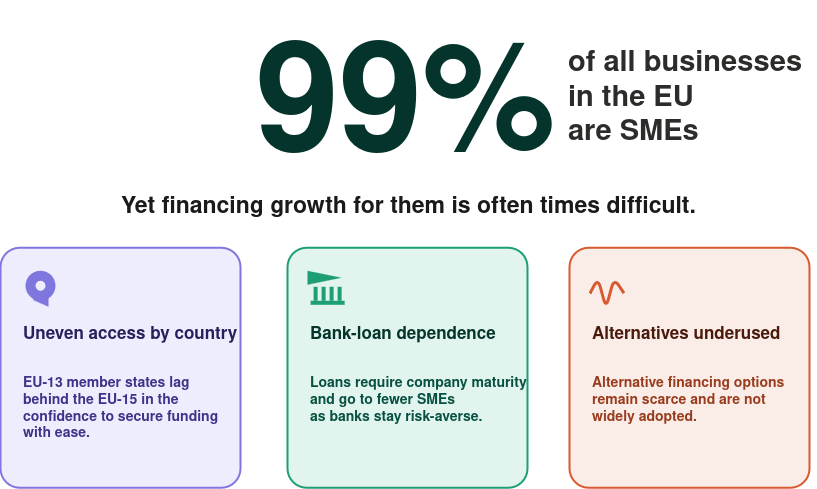
1. What is DEUSS?
DEUSS is a B2B2C (Business-to-Business-to-Consumer) online platform designed for the tokenization, issuance, and trading of bonds on blockchain. It is primarily intended for small and medium-sized enterprises in the European Union. Its goal is to it make it easier for companies to raise funds. B2B2C means that end-investors are not served directly by one entity. Instead, DEUSS uses licensed partners called Brokers, who access a so-called Core part of DEUSS. The Core is a main hub of DEUSS, responsible for managing the entire DEUSS ecosystem. Brokers can connect to it to leverage the services it offers.
2. Platform Ecosystem & Key Actors
The ecosystem consists of several participant types, with each one, holding a clearly defined role within the system:
- Platform Operator (Core): The internal DEUSS team. They ensure the platform's technological operation, approve the onboarding of new Brokers and oversees their compliance with established platform procedures, and possess elevated access rights for crisis intervention via the Backoffice application.
- Broker (Partner): A financial institution (e.g., a bank or a licensed broker). The Broker operates its own Whitelabel application, which is a gateway for the user to the DEUSS ecosystem. Through it, a user accesses platform services, such as the issuance and buying of bonds. Brokers help conduct KYC/AML checks, and facilitates access to the on-chain market.
- PSP (Payment Service Provider): An entity connecting the platform with the traditional banking system. PSPs process fiat deposits and withdrawals and reports to the platform for synchronization with on-chain assets.
- Guarantor: An entity that provides business guarantees for the issued bonds.
- End-Users:
- Issuer: A company aiming to raise capital by issuing a bond.
- Investor: A natural or legal person that purchases and holds bonds in their digital wallet.
3. High-Level Architecture
DEUSS is built on a hybrid architecture:
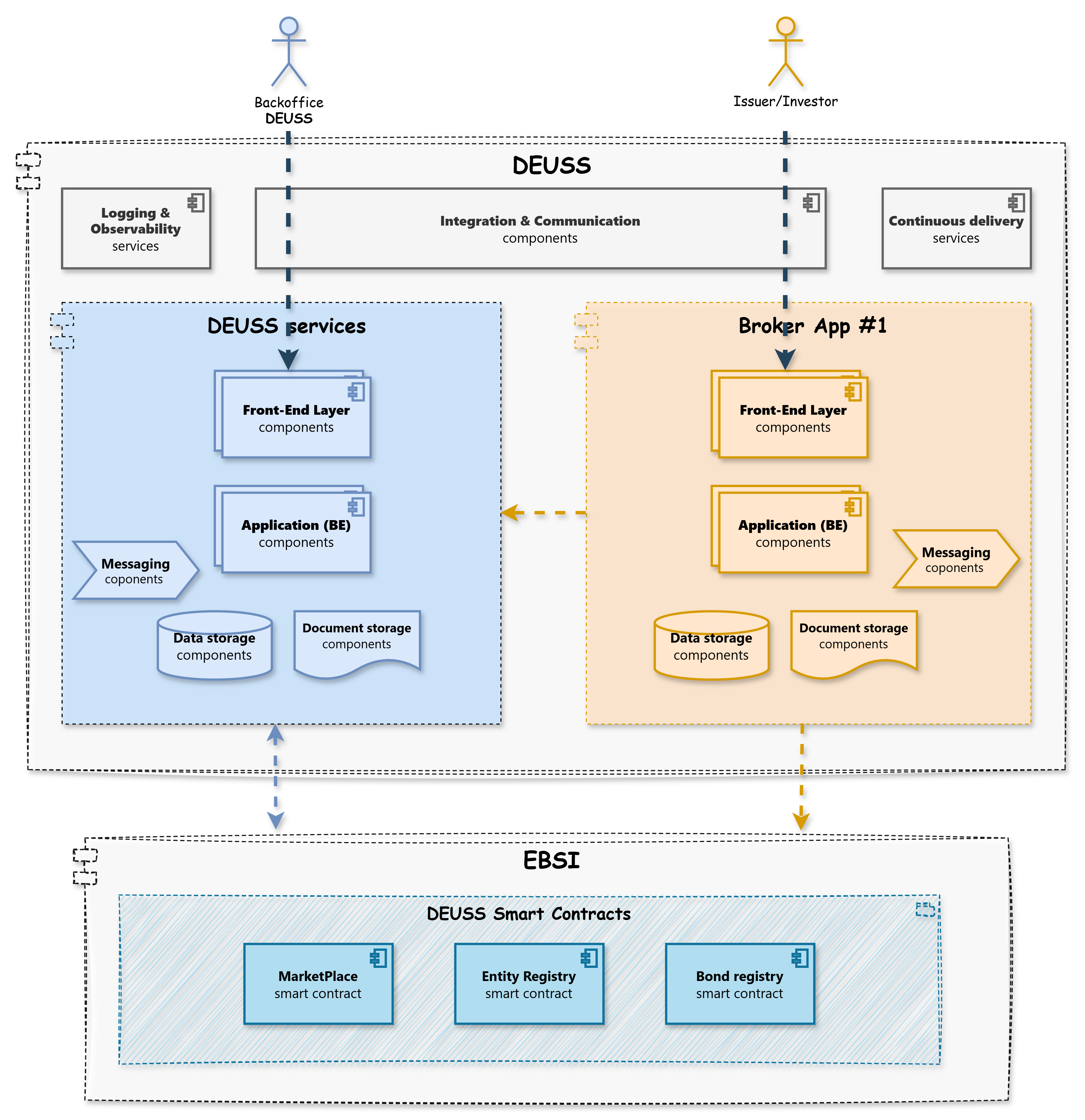
WEB2 Layer (DEUSS CORE)
The "brain" of the operations. This layer consists of highly available REST API microservices and relational databases.
- Function: It handles tasks that blockchains cannot perform or where on-chain execution would be cost-prohibitive. It maintains relational links (e.g., which user belongs to which Broker), stores physical documents (PDF term sheets), manages asynchronous task queues, enforces access rights (Tenant Isolation), and prepares data for on-chain execution.
- Security: All external communication is secured by banking-standard mTLS (Mutual TLS).
WEB3 Layer (EBSI Blockchain)
The "immutable ledger and vault." This layer operates on the European Blockchain Services Infrastructure (EBSI).
- Function: This is where user wallets and the actual bonds (as digital tokens) exist. It executes the real transfer of ownership (Settlement) and enforces business rules via Smart Contracts.
- Flexible Wallet Management: The platform supports varying levels of key management. End-users can be direct owners of their wallets (e.g., utilizing secure Passkeys), or the infrastructure can operate in a delegated custody mode where the Broker abstracts the technological complexity and manages the on-chain signatures on behalf of the client.
4. Navigation the Documentation
Depending on your role and what you are looking to accomplish, please proceed to the relevant section:
- Business documentation: contains a high level overview of the project and allows you to easily dissect it in just-enough detail.
- Technical specification: includes a detailed description of the technical solution; from its architecture, infrastructure, to instructions on mTLS connections, handling End-User JWTs, and accessing our REST and WEB3 APIs
Sources for the first image infographic: