Bond Preparation & Issuance
Once the company is verified and scored, the issuer can begin preparing a new bond offering. The process involves creating a draft, filling in the marketing and foundational financial details, and then collaborating with the distributor (the broker platform) to finalize the strict financial parameters.
Creating the Issuance Draft
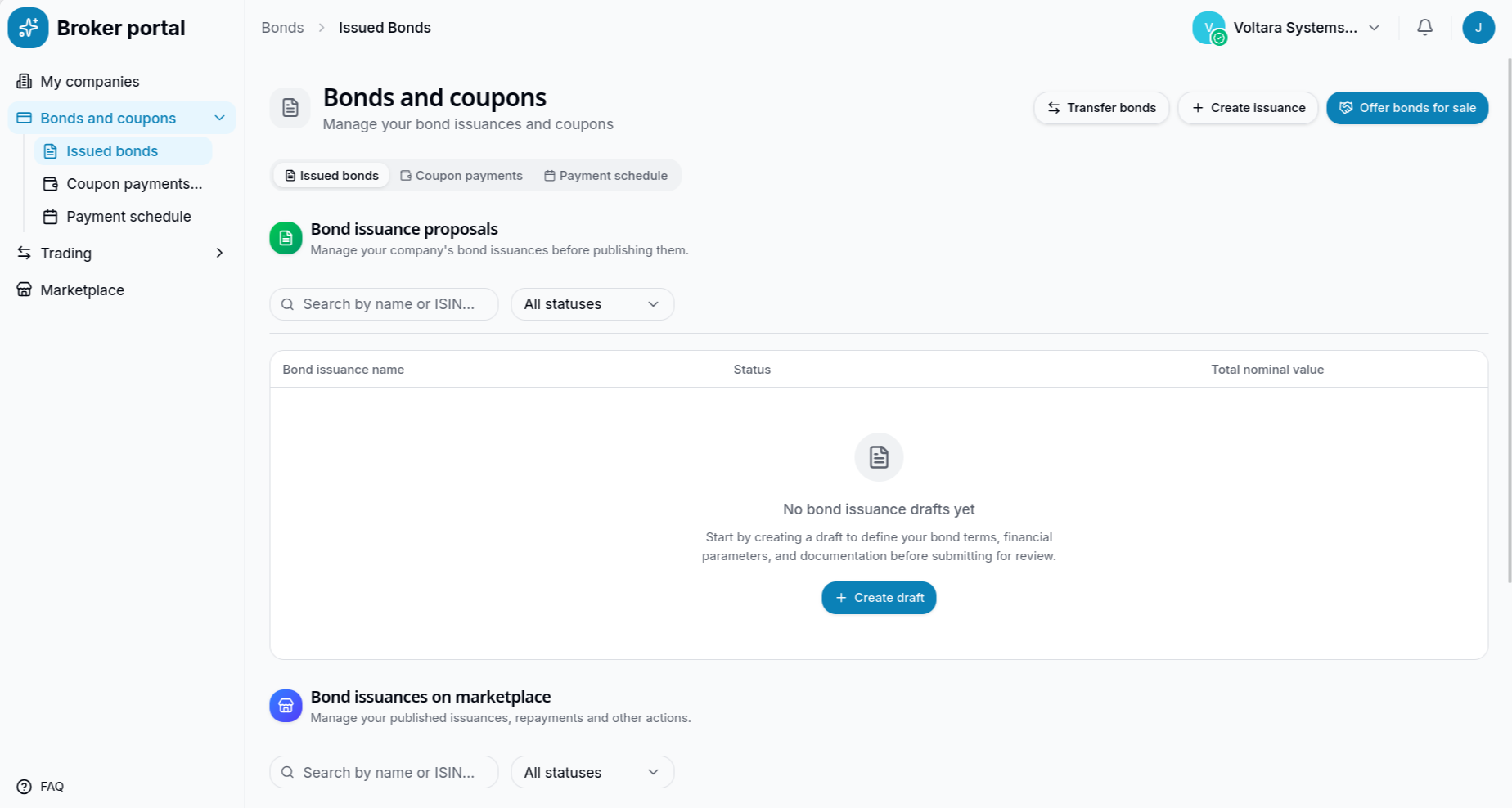
The user navigates to the "Issued Bonds" section. Initially, this section is empty. The user clicks "Create draft" to begin.
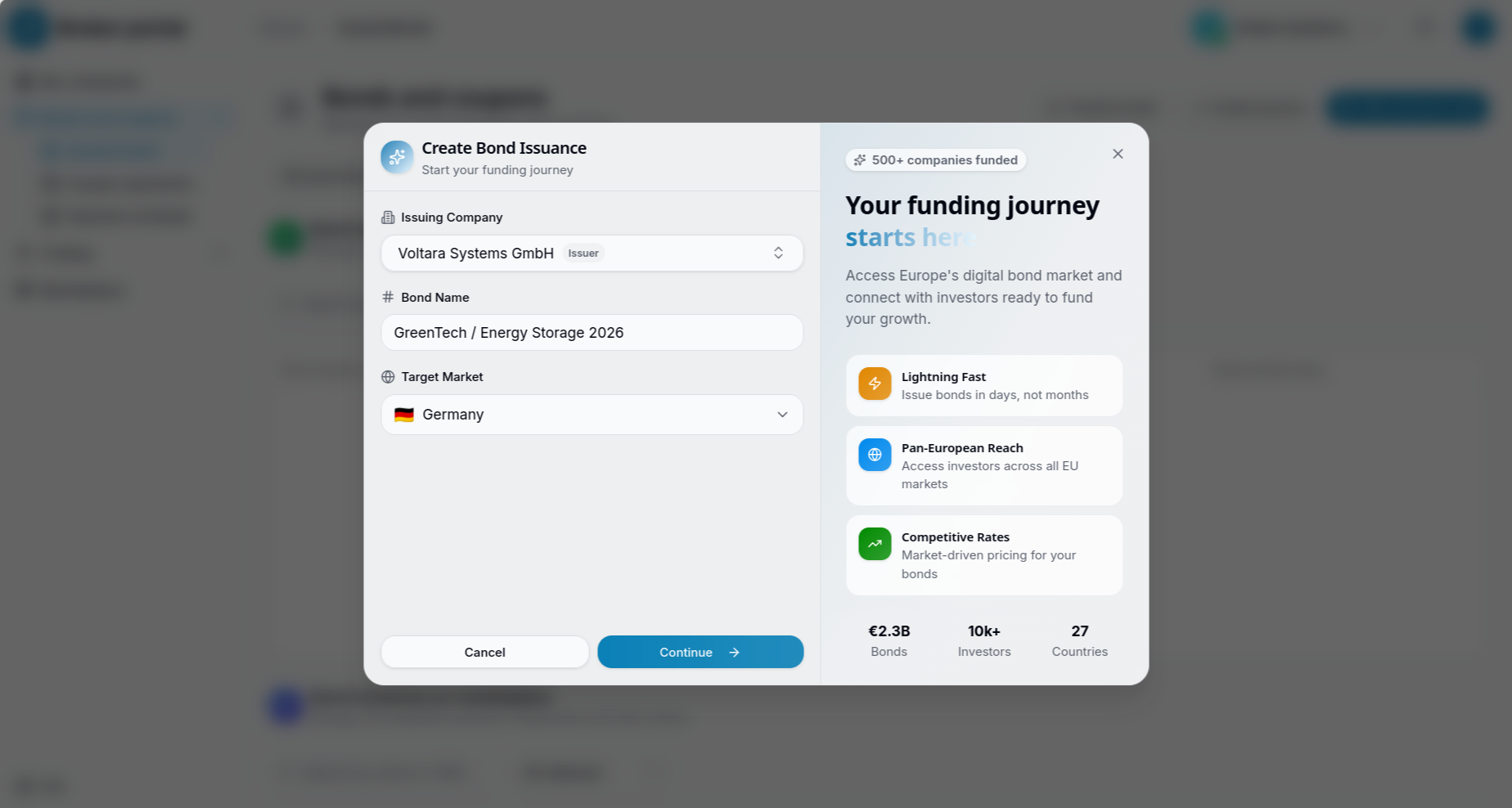
A modal prompts the user to select the issuing company (e.g., Voltara Systems GmbH), define the Bond Name (e.g., "GreenTech / Energy Storage 2026"), and select the Target Market country.
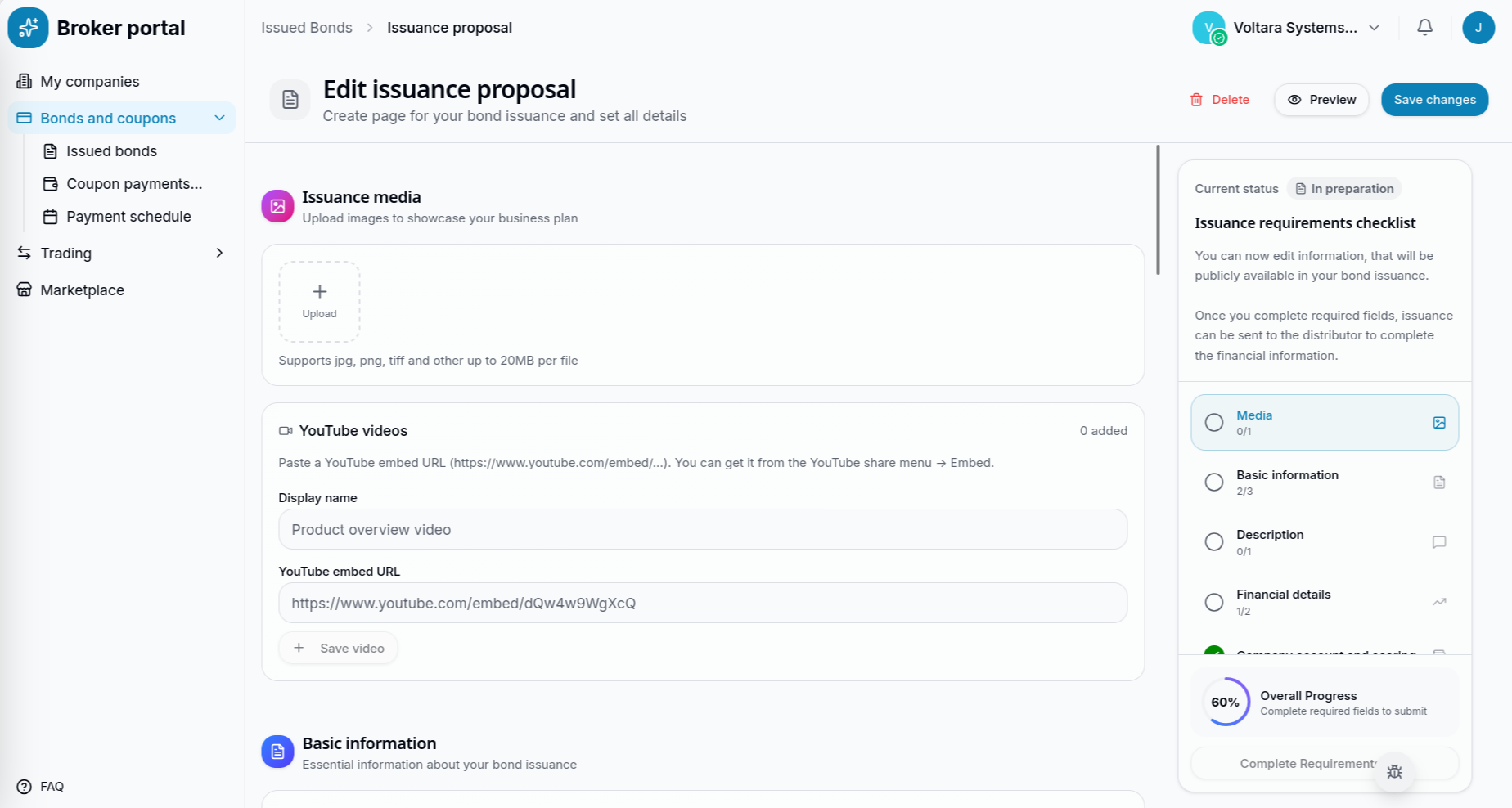
Fleshing out the Proposal
The platform guides the issuer through an intuitive step-by-step checklist to complete the issuance proposal. The user starts by uploading high-quality promotional media and a YouTube explainer video to make the bond visually appealing to prospective investors.
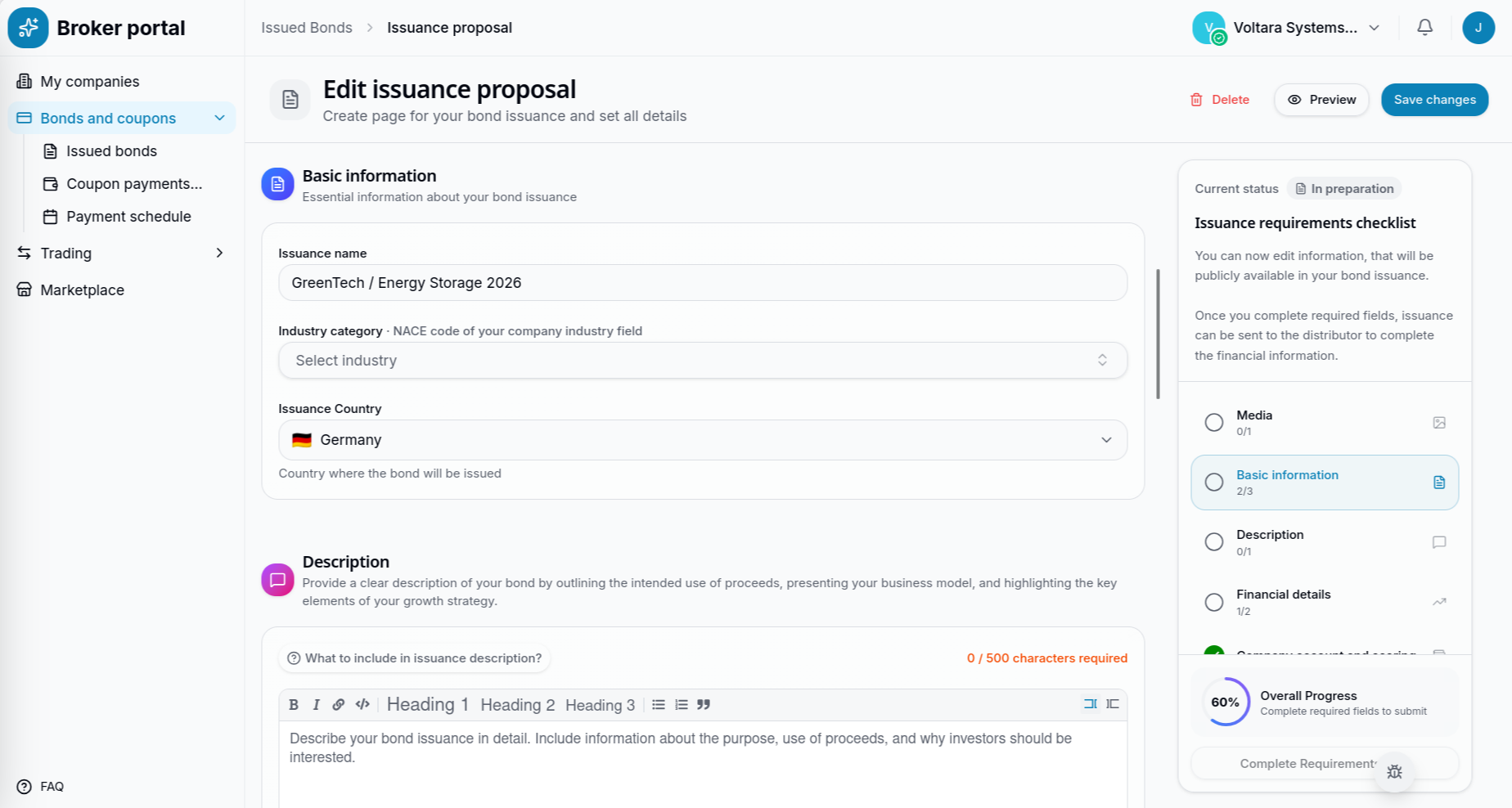
Next, the issuer fills out the fundamental details, such as the industry category (NACE code) and the descriptive text. This description outlines the specific use of proceeds (e.g., constructing a 50MWh automated battery assembly facility) and highlights the company's growth strategy.
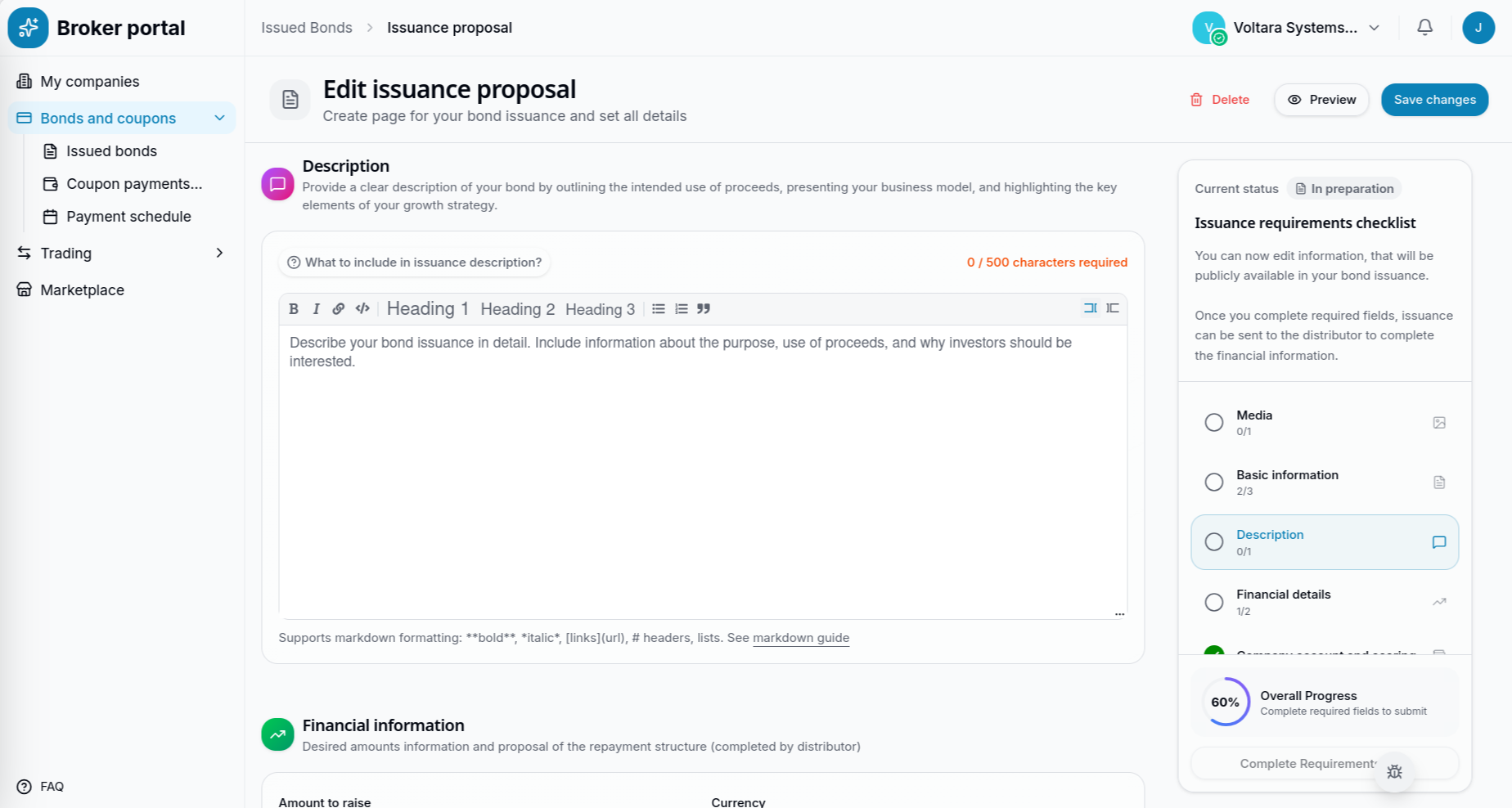
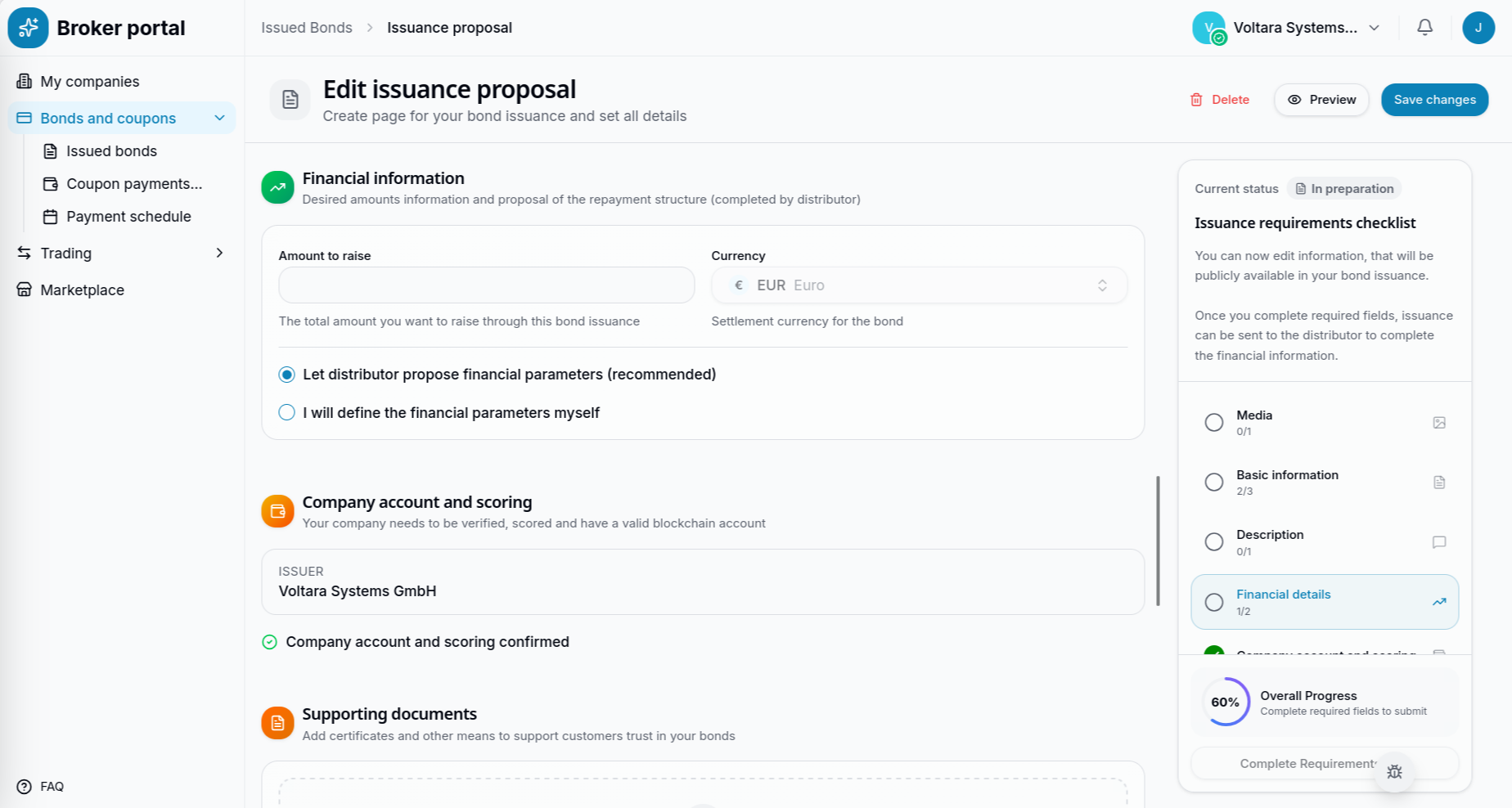
Moving to the financial information, the issuer defines the target amount to raise (e.g., €5,000,000) and the settlement currency.
Importantly, the issuer can choose to "Let distributor propose financial parameters." This is often recommended for SMEs, as the broker's risk team will use their market expertise to structure a competitive coupon rate and repayment schedule based on the company's scoring grade.
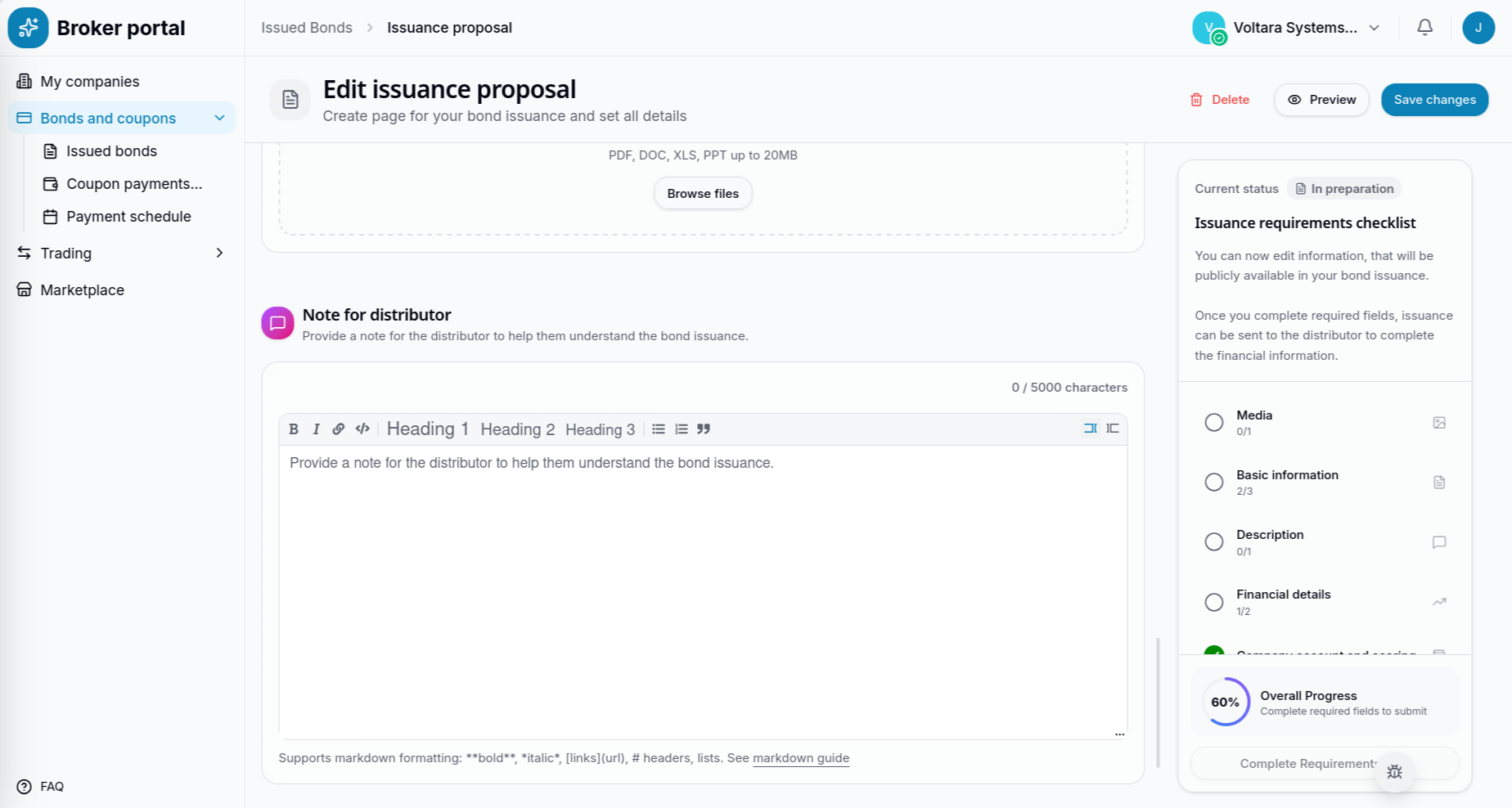
The issuer can also leave a private note for the distributor, explaining their preferred terms (such as a 5-year target term) and reinforcing key selling points (like state subsidies or existing order backlogs).
Submitting for Review
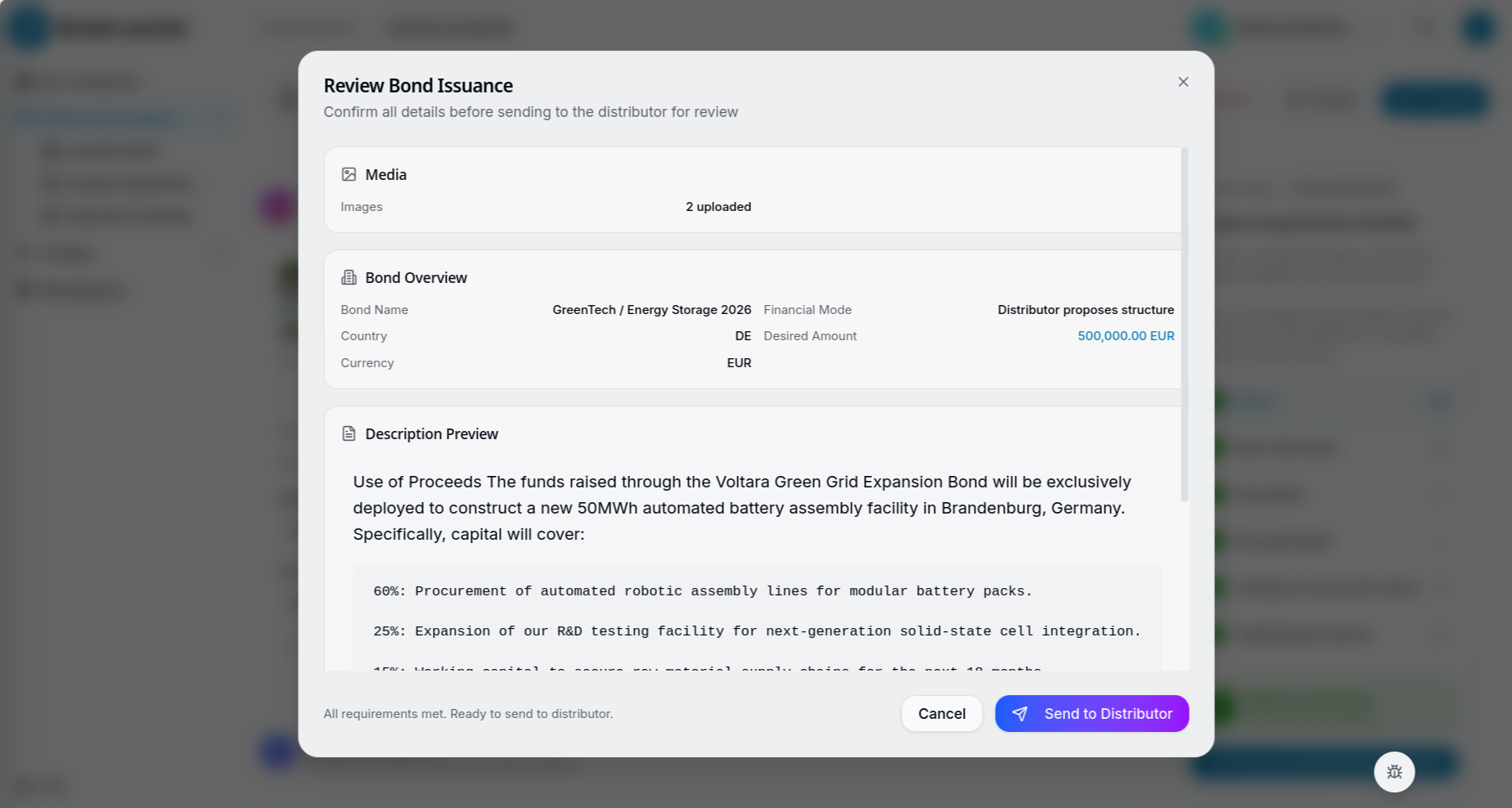
With the progress checklist showing all required fields are complete, the issuer reviews a summary of the bond issuance. Finding everything in order, they click "Send to Distributor".
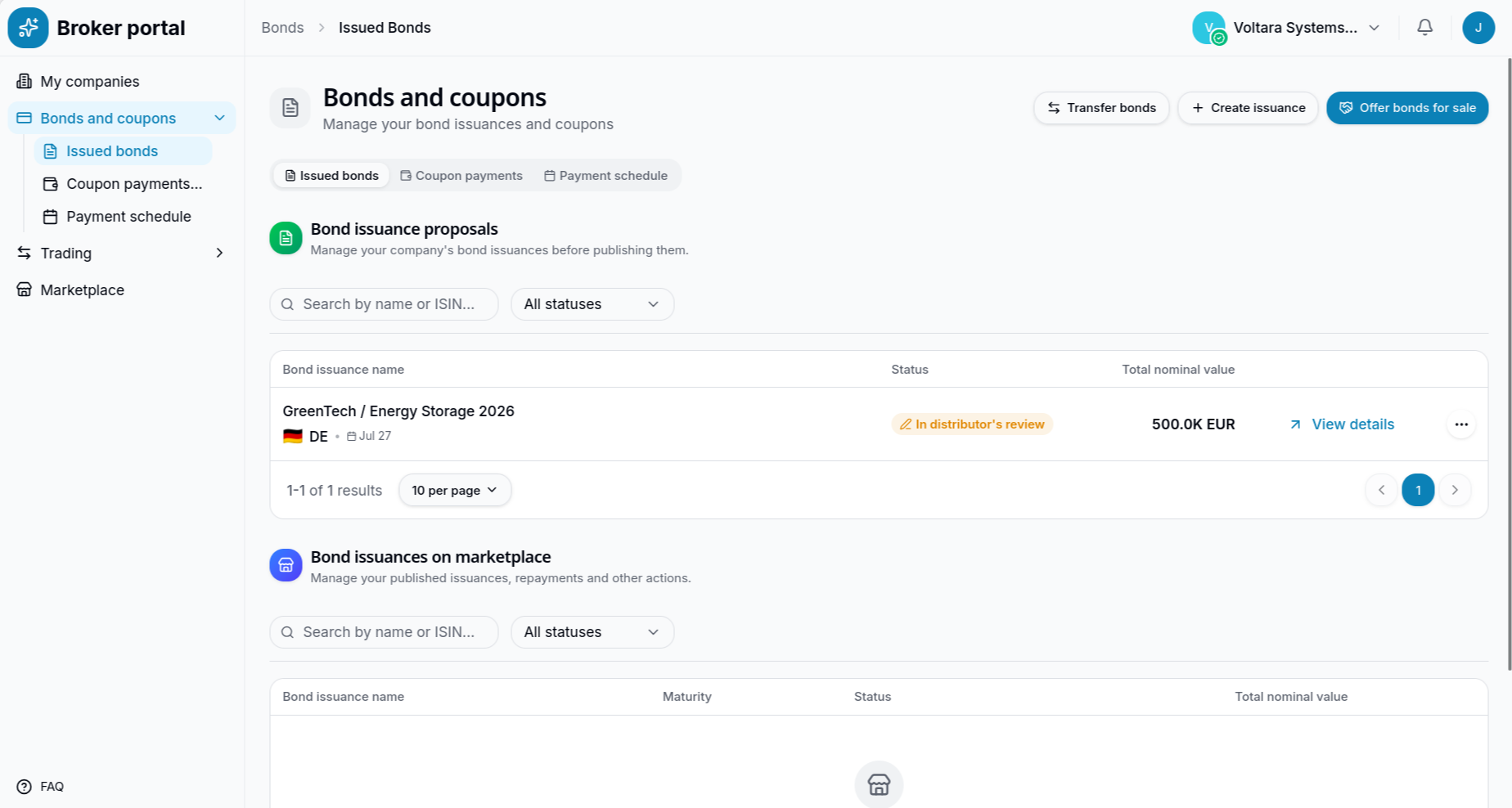
The bond draft is now listed on the dashboard with the status "In distributor's review." The issuer must wait while the broker platform's financial team structures the final terms.
Distributor Proposal & Agreement
Once the distributor completes their review, they populate the strict financial identifiers (ISIN, CFI, FISN), structure the coupon rate, define the payment frequency, and draft the binding covenants.
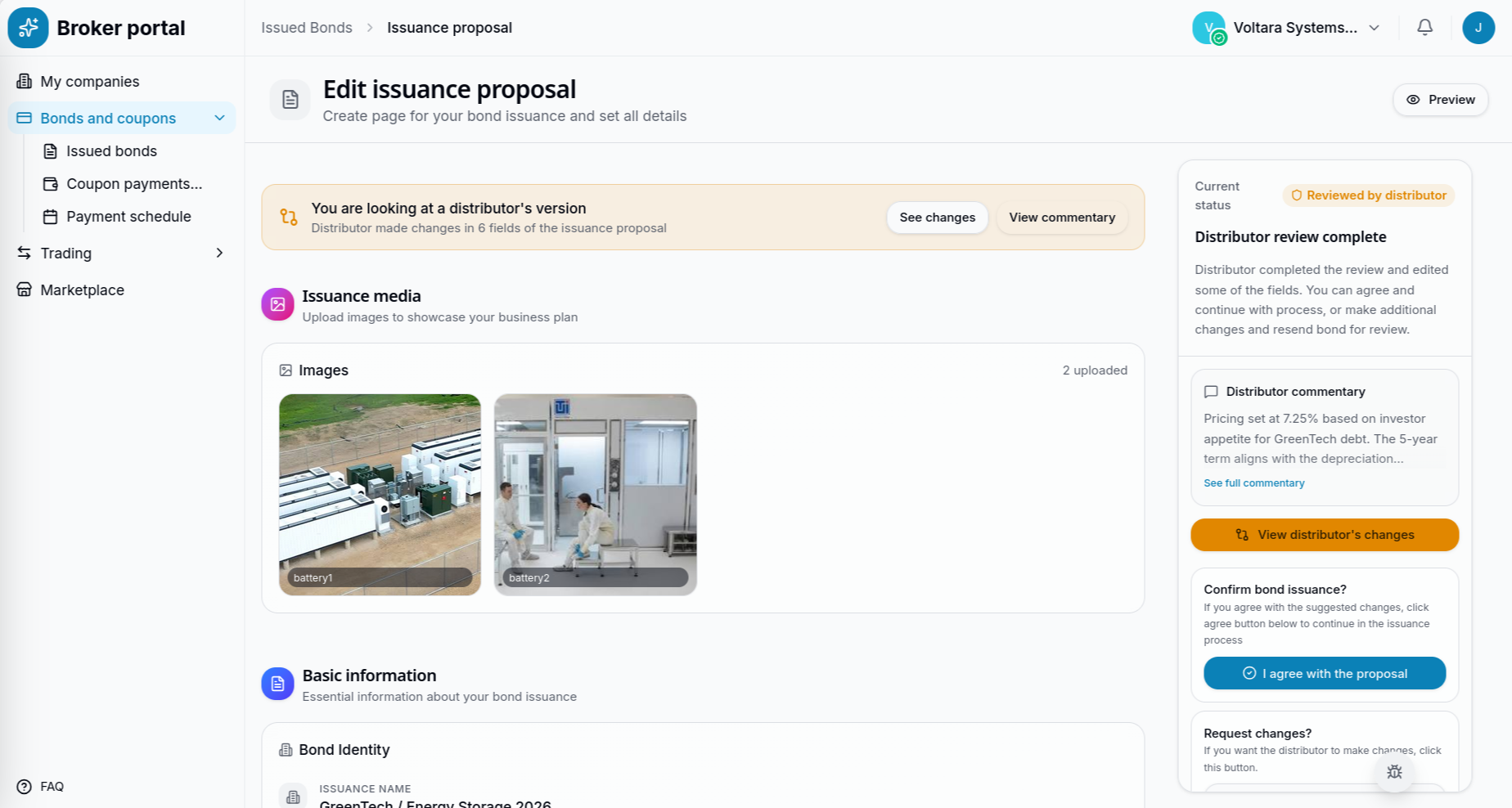
The issuer is notified and logs back in to see the "Reviewed by distributor" status. The platform clearly highlights that the distributor made changes to the proposal and provides a full commentary explaining the rationale.
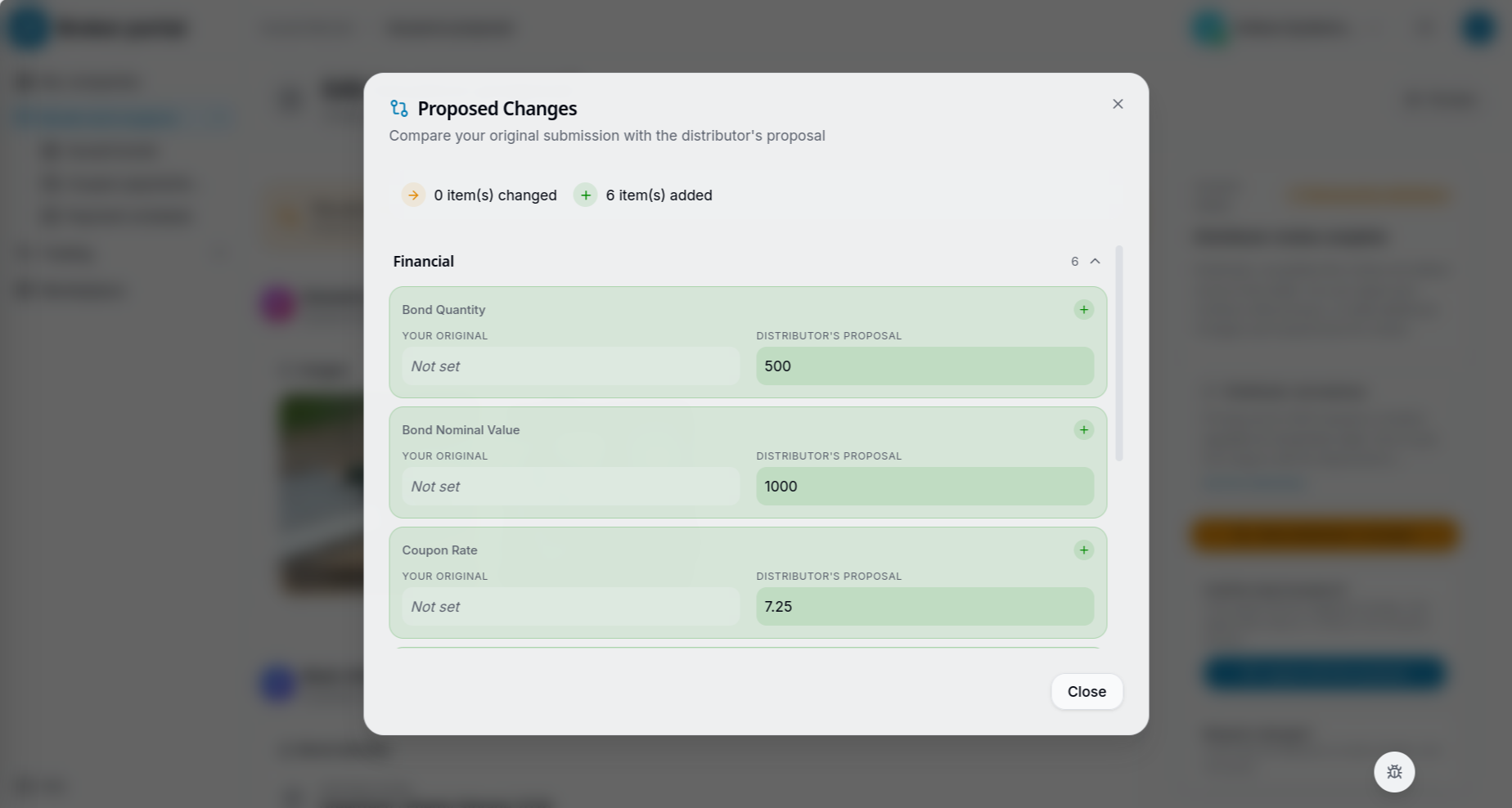
The issuer clicks to view the specific "Proposed Changes." The system presents a clear comparison modal, showing how the distributor structured the €500,000 raise: 500 bonds, a nominal value of €1,000 each, and a competitive 7.25% coupon rate.
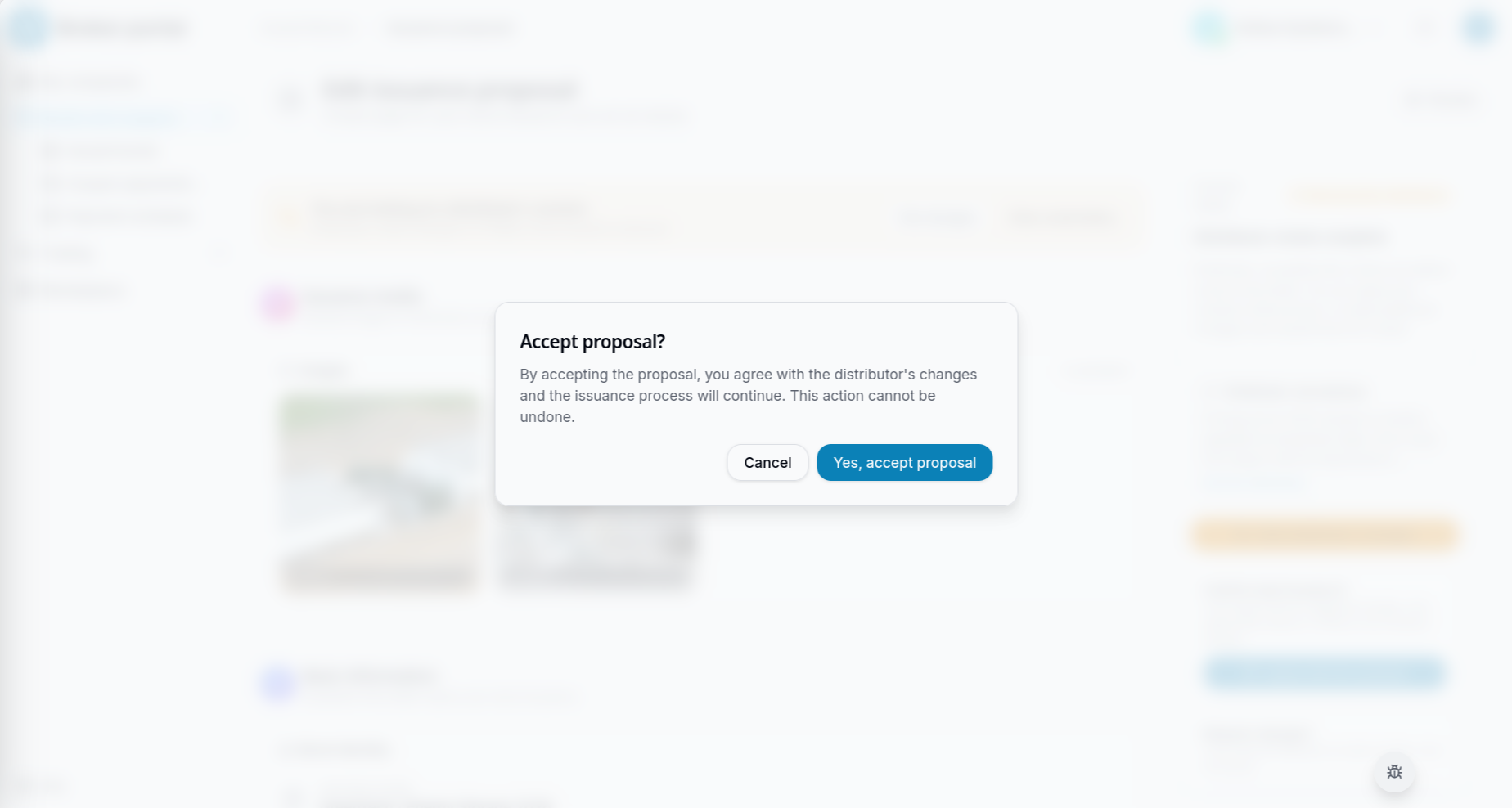
Satisfied with the finalized financial structure, the issuer clicks "Yes, accept proposal" to formally lock in the terms.
Registration and ISIN Assignment
The bond now enters the final registration phase. The DEUSS platform automatically communicates with the relevant financial authorities and registries to assign the official ISIN (International Securities Identification Number).
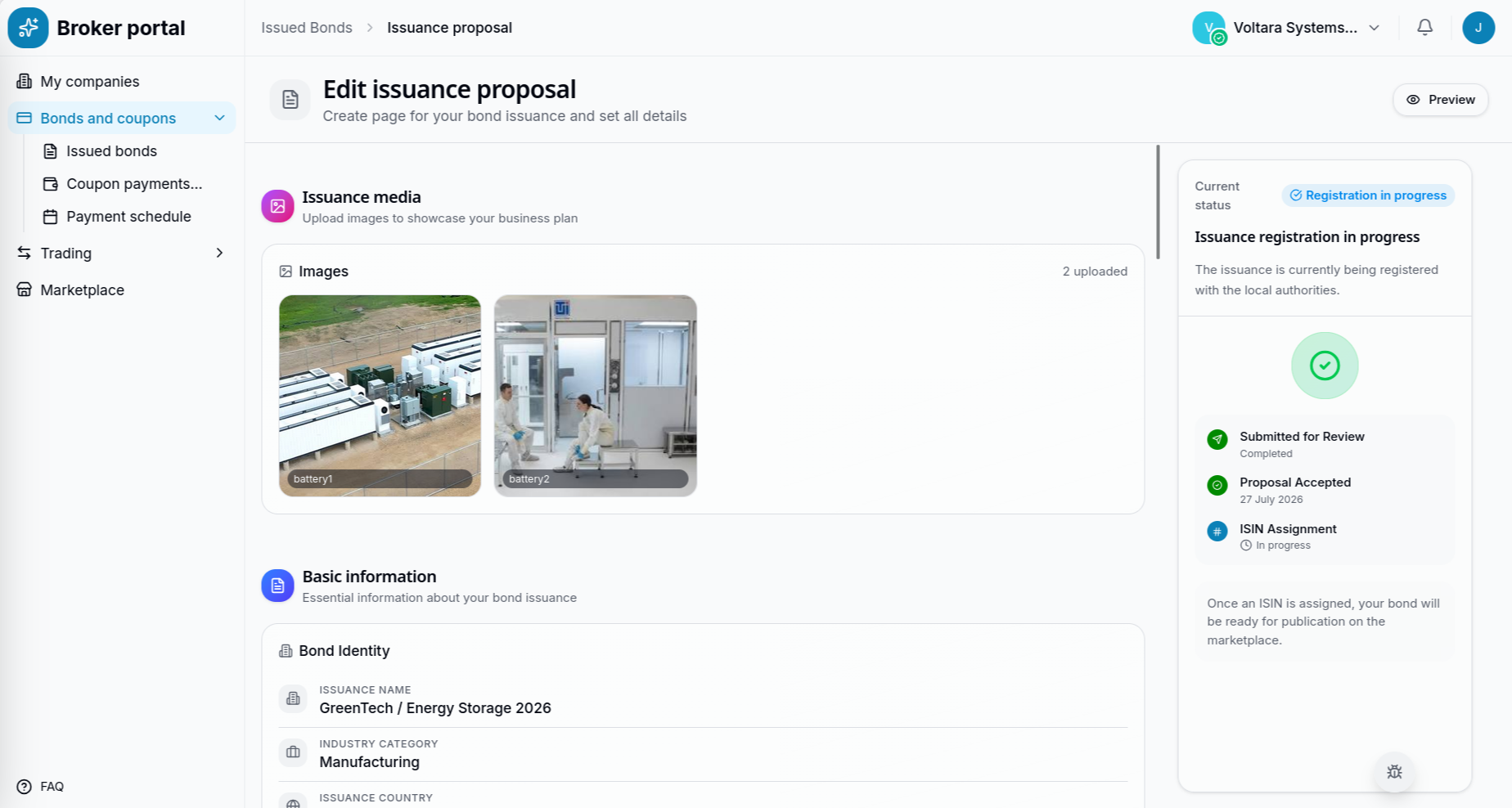
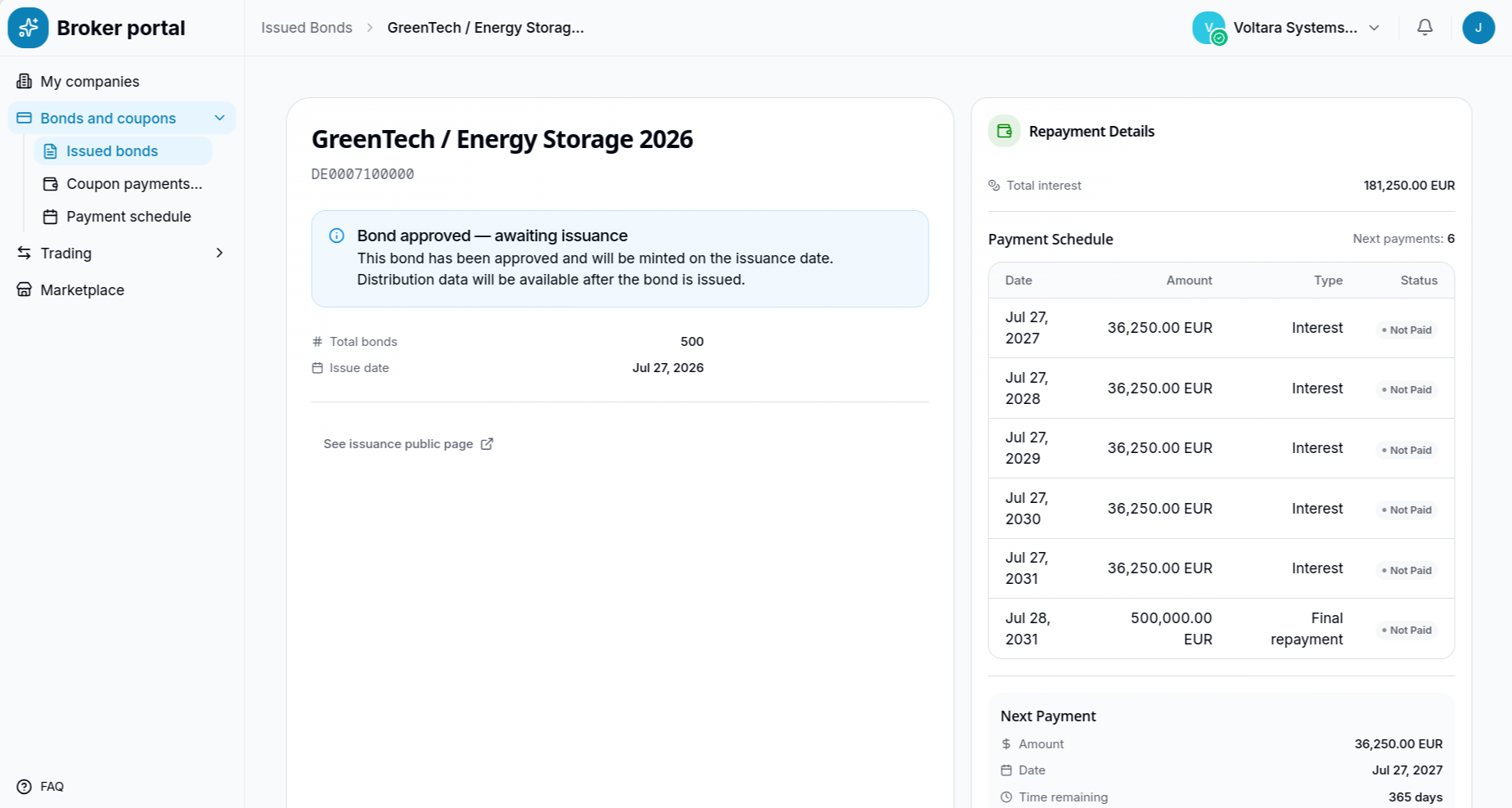
Once the ISIN is assigned, the bond enters an "Awaiting issuance" state. The issuer can now view the complete, locked-in repayment schedule, calculating the exact interest payments over the bond's lifecycle. At this stage, the bond waits for its designated Issue Date to be minted on the blockchain.
Bond Issued & Minted
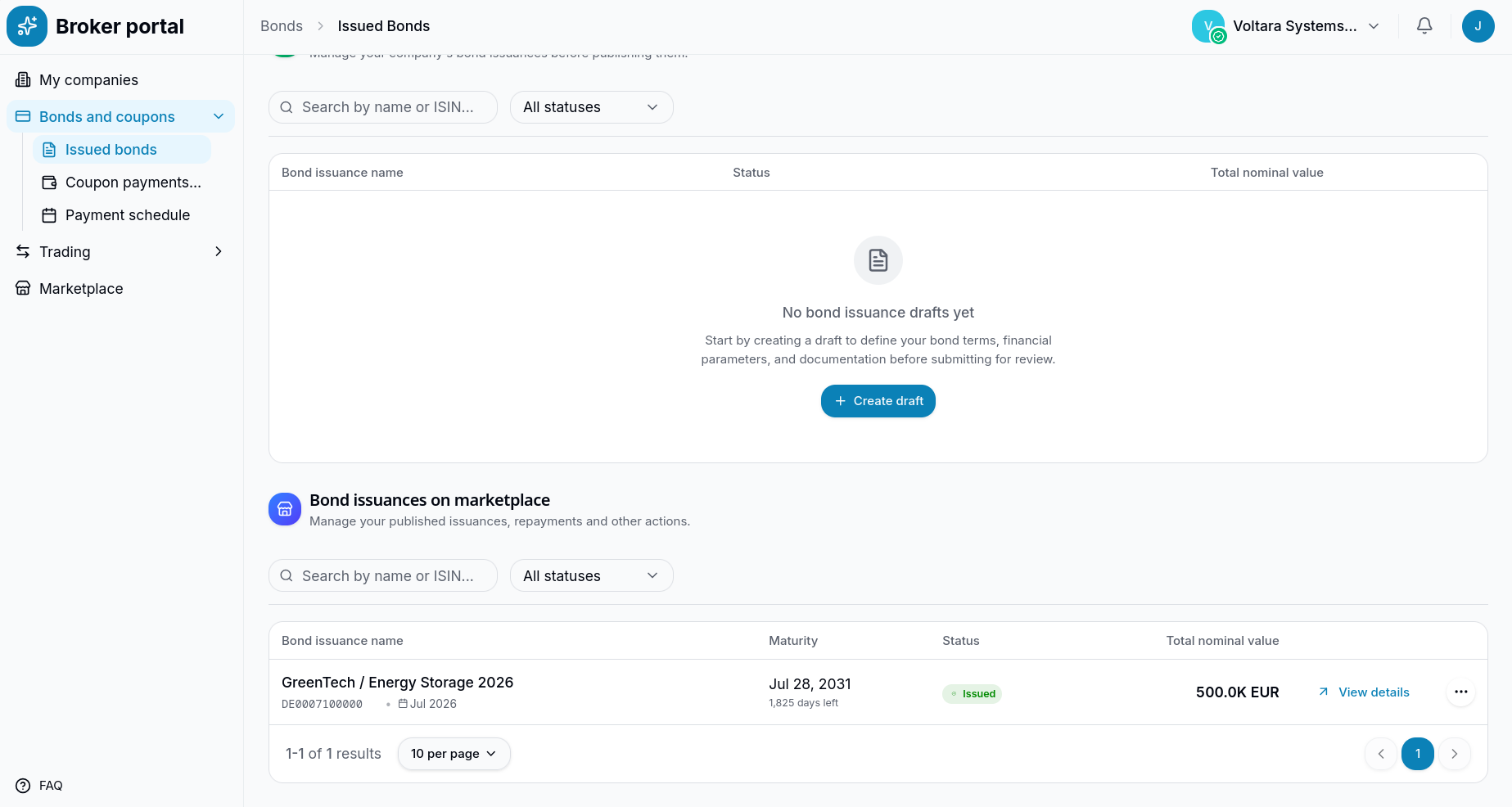
On the specified issue date, the DEUSS Core platform mints the tokens representing the bonds directly into the issuer's secure wallet. The dashboard now lists the bond under "Bond issuances on marketplace" with a green "Issued" badge.
Opening the bond details, the issuer can see that they currently own 100% of the 500 issued bonds.
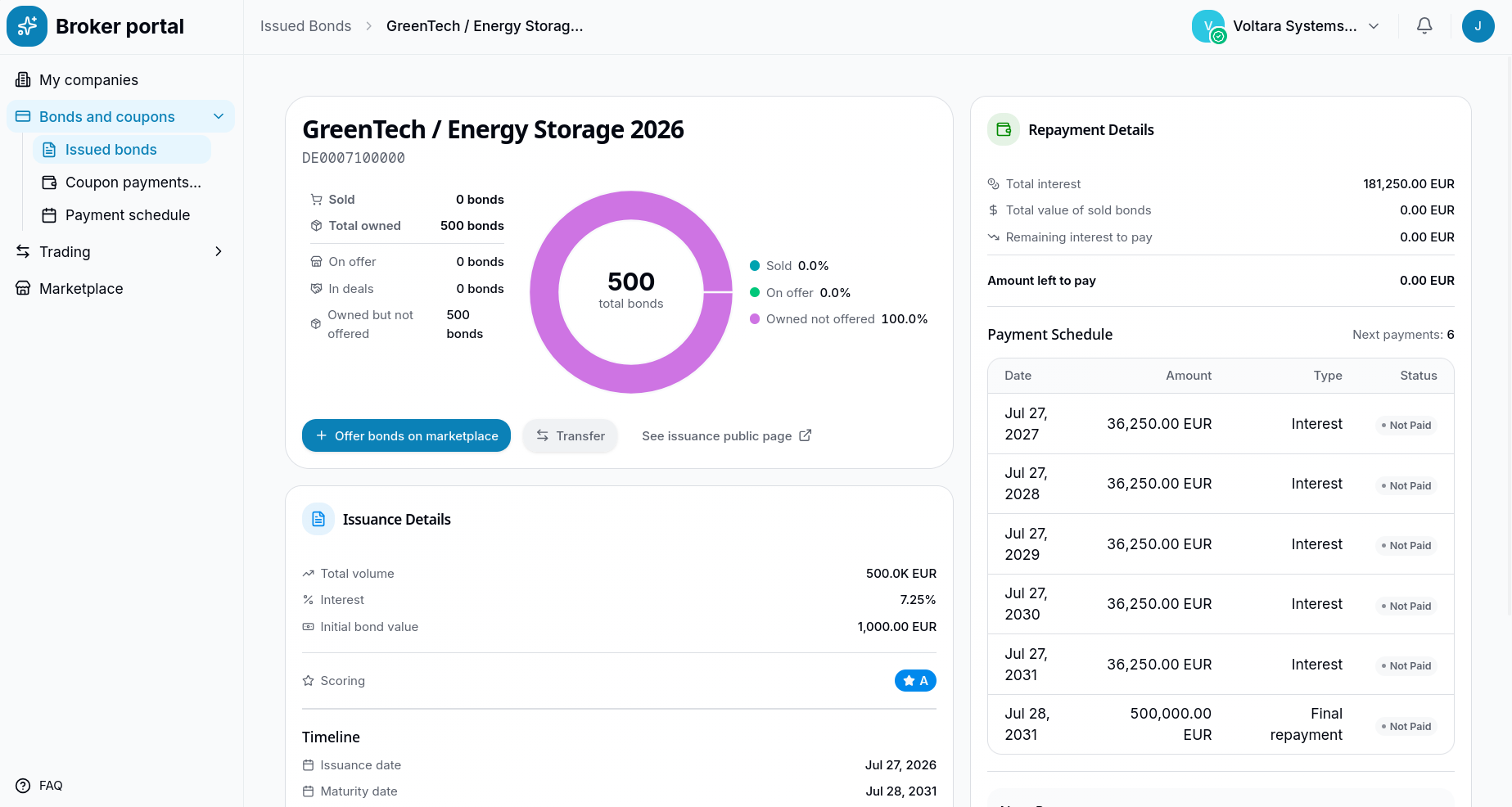
The asset is officially live and can be seen by all the investors on the Marketplace page.
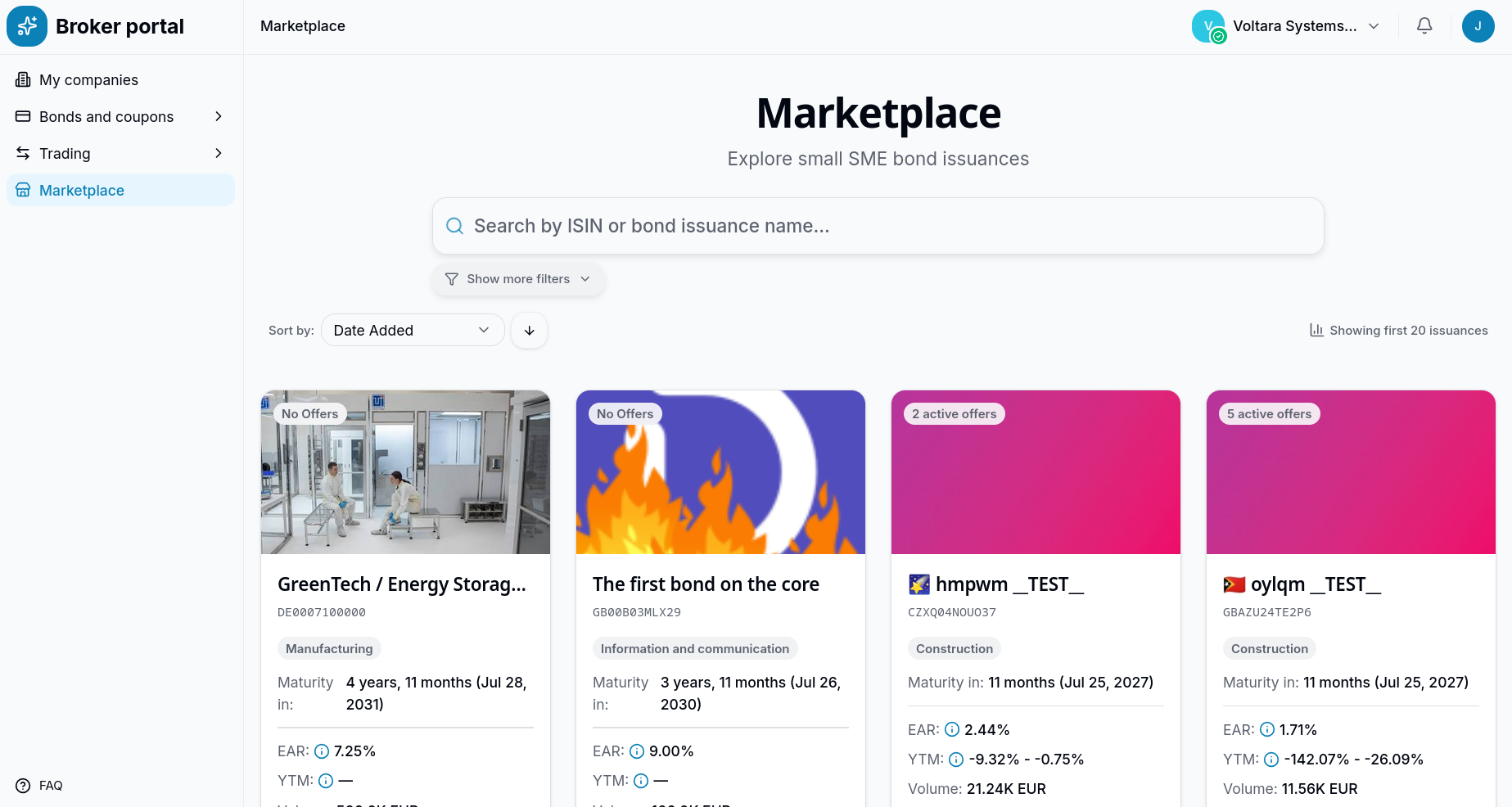
The issuer is fully equipped to transition to the next phase: offering these bonds for sale to investors on the primary market.